CenterokaFrom 2.11× to 6.86× ROAS — without treating Google and Meta like the same channel
One clinic, two channels with completely different jobs. Google was tuned into an efficiency engine on existing demand; Meta was rebuilt around a lower-friction entry point. Jan–Jul 2024 vs Jan–Jul 2026.

Overall ROAS
ROAS improvement
CPA
Unique patients
Performance data: Google Ads + Meta Ads, January–July comparisons, 2024–2026.
Combined · Jan–Jul 2024 → Jan–Jul 2026
Jan–Jul 2024 → Jan–Jul 2026
Context
Centeroka is an ophthalmology clinic in Kyiv with two locations, Troyeshchyna and Lukianivka, and a service mix that ranges from routine diagnostics to vision correction and cataract surgery. Those services do not share economics, and the two paid channels do not share a job. Google reaches people already searching for a specific procedure. Meta reaches people who haven't decided anything yet. Running the same offer and the same optimization logic across both is what kept the account average and expensive.
The challenge
Both channels ran the same job: buy clicks for a procedure. Google averaged bids across services and locations with no query hygiene, so spend chased volume, not margin. Meta pushed a procedure-first offer at a cold audience — big reach, weak response, ₴4,001 CPA.
What we did
- Split the account by the job each channel actually does: Google captures demand that already exists, Meta creates the first step into the funnel.
- Rebuilt Google around conversion-focused automated bidding, service-level target CPA, and relentless search-query hygiene.
- Segmented Google by service demand and clinic location so bids and budget could follow margin instead of an account-wide average.
- Moved Meta from a procedure-first ad to a diagnostic-discount entry offer for the clinic's older core audience in August 2025, then let the clinic route diagnostic visitors to appropriate treatment.
Outcome
Comparing January–July 2024 with January–July 2026: overall ROAS went from 2.11× to 6.86×, CPA from ₴1,520 to ₴932, and unique patients from 2,664 to 6,622. Google contributed the efficiency, Meta contributed the scale of new entries, and the two were managed as different jobs from the start.
Chapter 01 · Google Ads
The efficiency engine: better demand, not more of it
Google clicks grew 11.5% while ROAS grew 184.8%. That gap is the whole point — this channel didn't scale by buying more traffic, it scaled by improving the quality of the demand it was already paying for.
ROAS
+184.8%
CPA
−13.1%
Unique patients
+155.5%
Conversions
+15.5%
Clicks
+11.5%
Bidding moved to conversion logic
Migrated Manual CPC toward Maximize Conversions, then service-level target CPA. tCPA was tuned across many iterations, roughly ₴750–₴2,800 depending on the economics of each service.
Search-query hygiene, continuously
500+ negative keywords added over the period, 209 of them on the brand campaign alone. Search Partners and low-quality placements were removed rather than tolerated.
Segmentation by demand and location
Separate campaigns for vision correction, cataract and general queries, split across the Troyeshchyna and Lukianivka locations, plus protective brand and competitor campaigns — so bids and budgets follow margin and ROAS instead of an account-wide average.
Ad and asset coverage
150+ responsive search ads created or reworked. Performance Max ran on the clinic data feed with its own negative-keyword lists, expanding beyond pure search without cannibalizing core campaigns.
Read the numbers together: +11.5% clicks against +155.5% unique patients. This was quality and efficiency work, not a traffic-volume spike.
Chapter 02 · Meta Ads · August 2025
The turning point: change the entry, not the audience
Meta impressions fell 69.5% — from 46.8m to 14.3m — while clicks rose 216.6% and CPA dropped 83.3%. Reach went down and response went up, because the offer finally matched what the audience was ready to say yes to.
ROAS
+333.0%
CPA
−83.3%
Unique patients
+123.7%
Conversions
+187.8%
Clicks
+216.6%
Impressions
−69.5%
Before · procedure-first
- 01Ad sells a specific procedure up front
- 02Only a small ready-to-buy slice responds
- 03High impressions, weak response, ₴4,001 CPA
After · diagnostic entry point
- 01Clear diagnostic-discount offer for the older core audience
- 02Patient books a diagnostic visit at the clinic
- 03Clinic converts suitable visitors to appropriate further treatment
August 2025 is visible in the raw data: monthly Meta clicks went from 8,412 in July to 47,539 in August and stayed at a materially higher scale. The source reports CTR grew 10.5× while impressions fell.
Chapter 03 · Channel roles
Two engines, two jobs — complementary, not competing
Neither channel was asked to do the other's work. That's why both improved instead of trading performance back and forth.
Stable, higher-ROAS demand capture
- Meets intent that already exists
- 7.32× ROAS on a modest click increase
- Bids follow service margin, not volume
- Efficiency compounds through query hygiene
Faster-scaling, lower-CPA entry point
- Creates the first step for undecided patients
- ₴669 CPA — the cheapest way into the funnel
- Scale comes from relevance, not reach
- Feeds the clinic's own conversion process
Google made each existing patient cheaper to win. Meta made the pool of possible patients bigger. Same account, different jobs.
Chapter 04 · The transferable part
Find the right entry point for your audience and economics
This is not a recommendation to run a diagnostic offer. It worked here because it matched one clinic's older core audience and its service economics, and because the clinic could convert a diagnostic visit into appropriate treatment on its own. The transferable lesson is the question, not the answer: what is the lowest-friction first step your specific audience will take, and does your business make money after they take it? Copy the reasoning, not the template.
Proof · Real dashboards
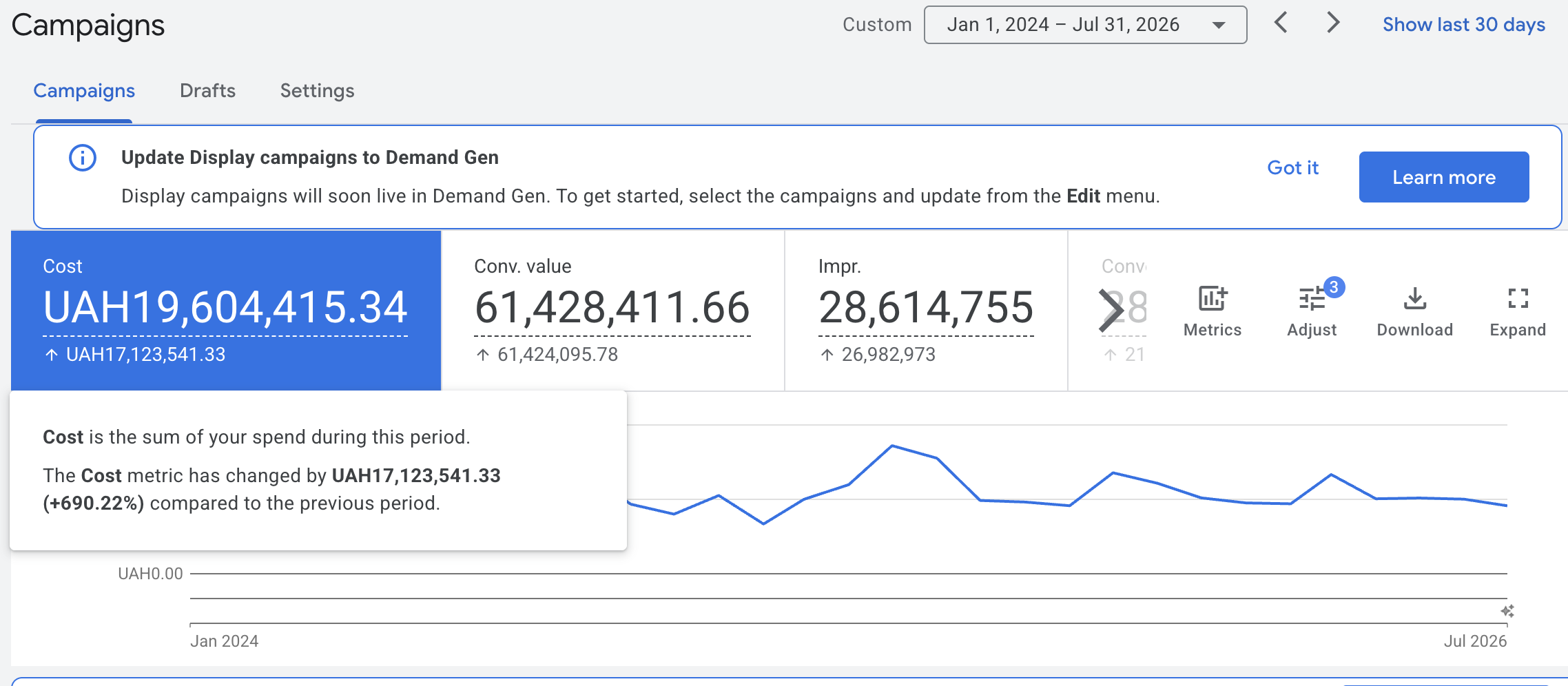
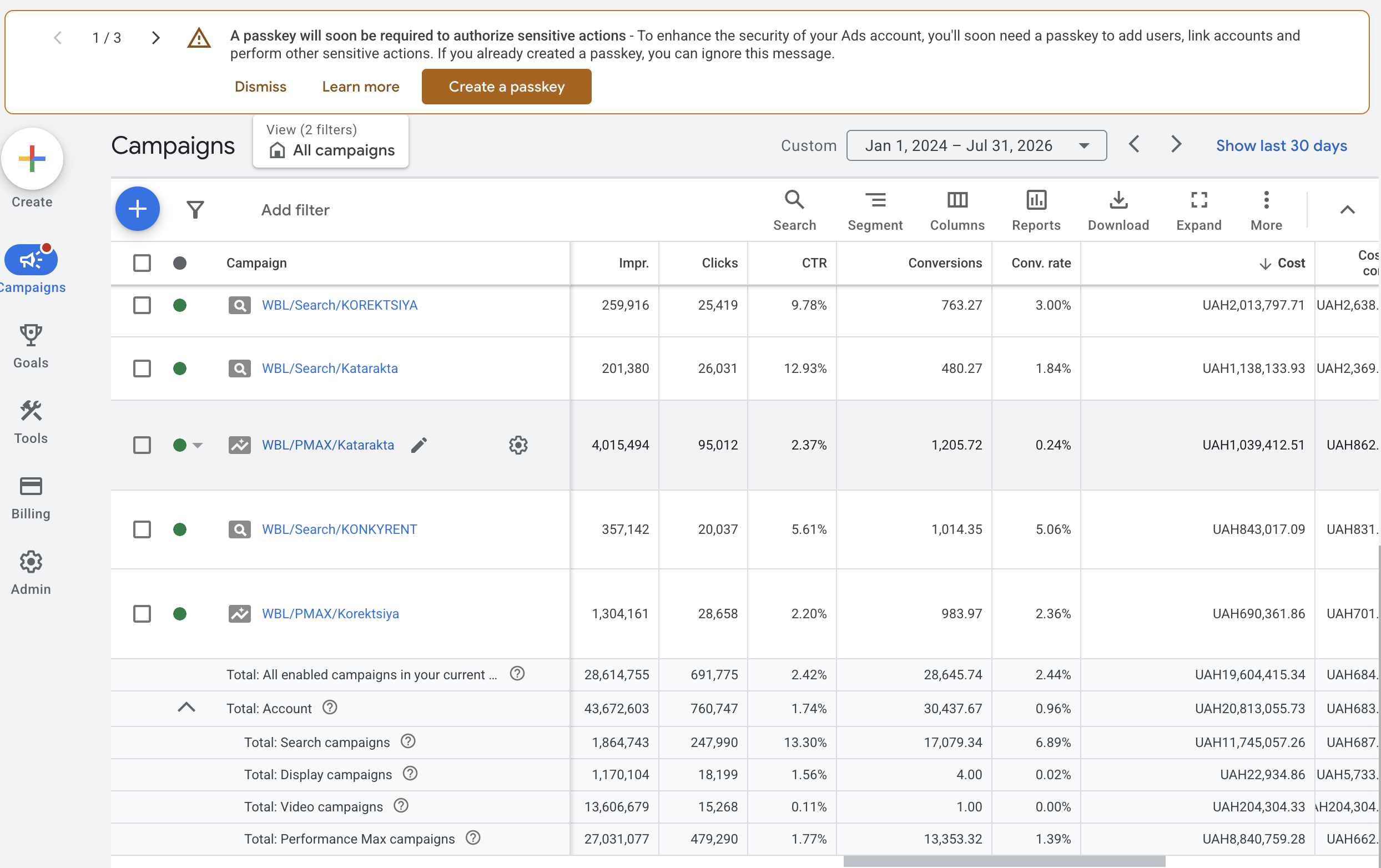
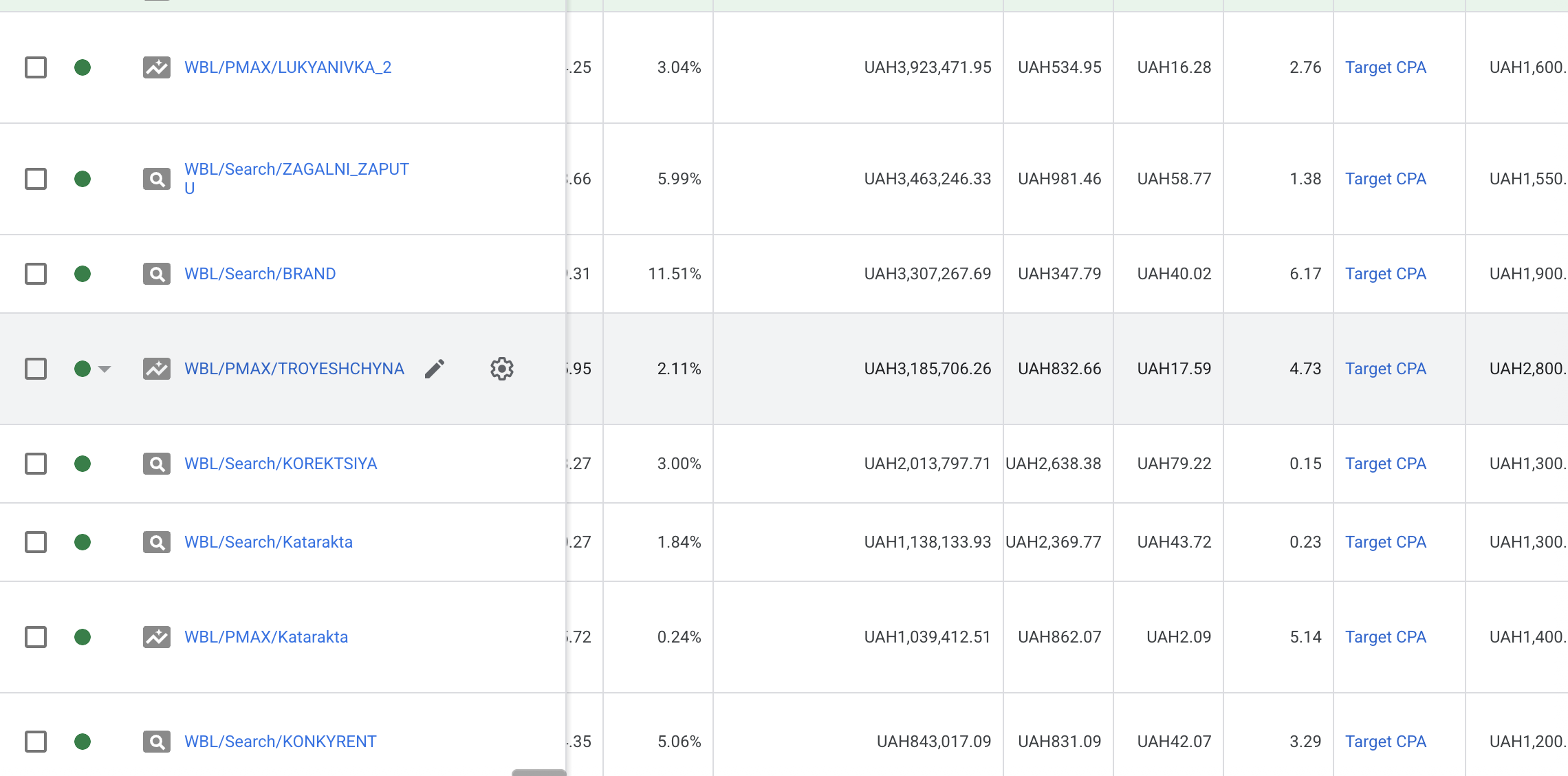
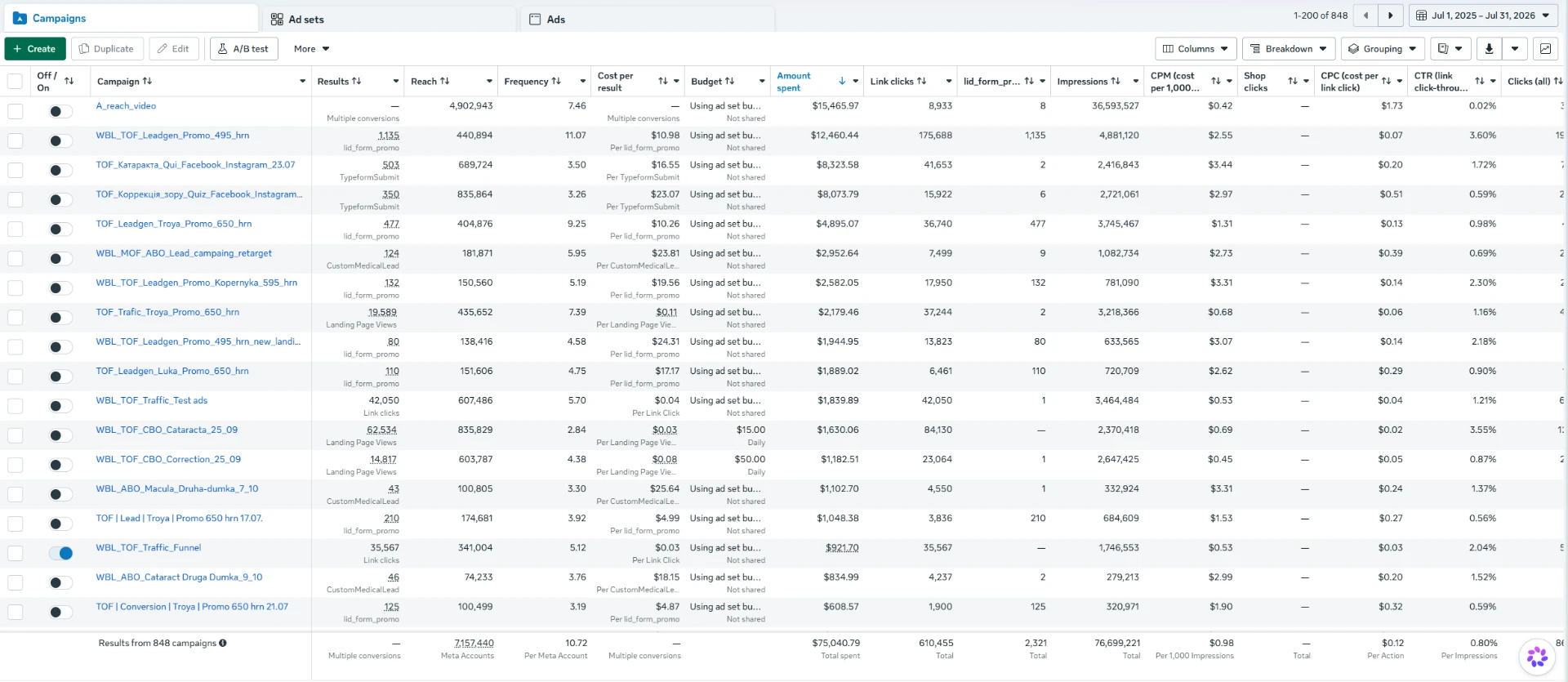
Real dashboards, zero editing. Judge the numbers yourself.
Screenshots pulled straight from the client's own ad and analytics dashboards. Same numbers we've been quoting on this page.
The creative
Here's what actually ran on this account.






Want this for your brand? Book the 45-min call.
You leave with a 90-day plan whether we work together or not.