Taylor JoelleFrom 185 orders to 5,131 in one year
Both channels brought traffic that barely converted — a preorder-heavy dress brand serving old customers instead of finding new ones. We rebuilt both: purchase optimization on Google, acquisition-first structure on Meta.
Google orders (Jan–Jul)
Meta orders (Jan–Jul)
Google conversion rate
Meta conversion rate
Google Ads + Meta Ads, Shopify Attribution (last non-direct click). January–July 2025 vs. January–July 2026. Revenue and full P&L figures are intentionally excluded from this report — the focus is traffic, conversion, and customer mix.
Jan–Jul, one year apart
2025 → 2026
Context
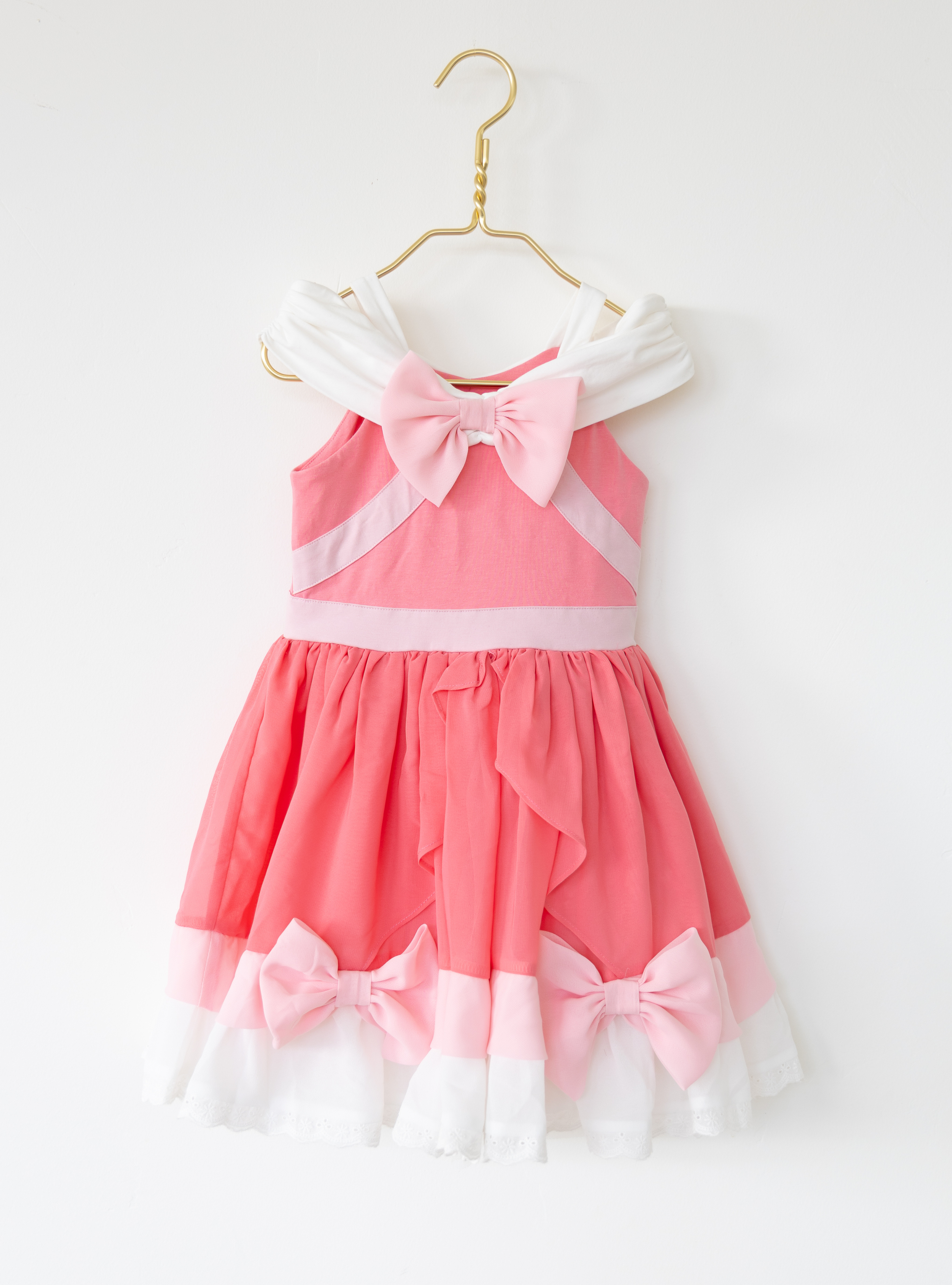
Taylor Joelle sells ultra-soft, Disney- and Warner Bros.-licensed dress-up dresses for kids — Cinderella, Frozen, Moana, Rapunzel and other characters, sold direct via Shopify. The catalog runs on a launch cycle (a new licensed collection roughly every 3–4 weeks) and increasingly on preorder — up to a 3–4 month wait on hero styles. Google and Meta were the two paid channels, and both were technically 'running' without actually finding new customers.
The challenge
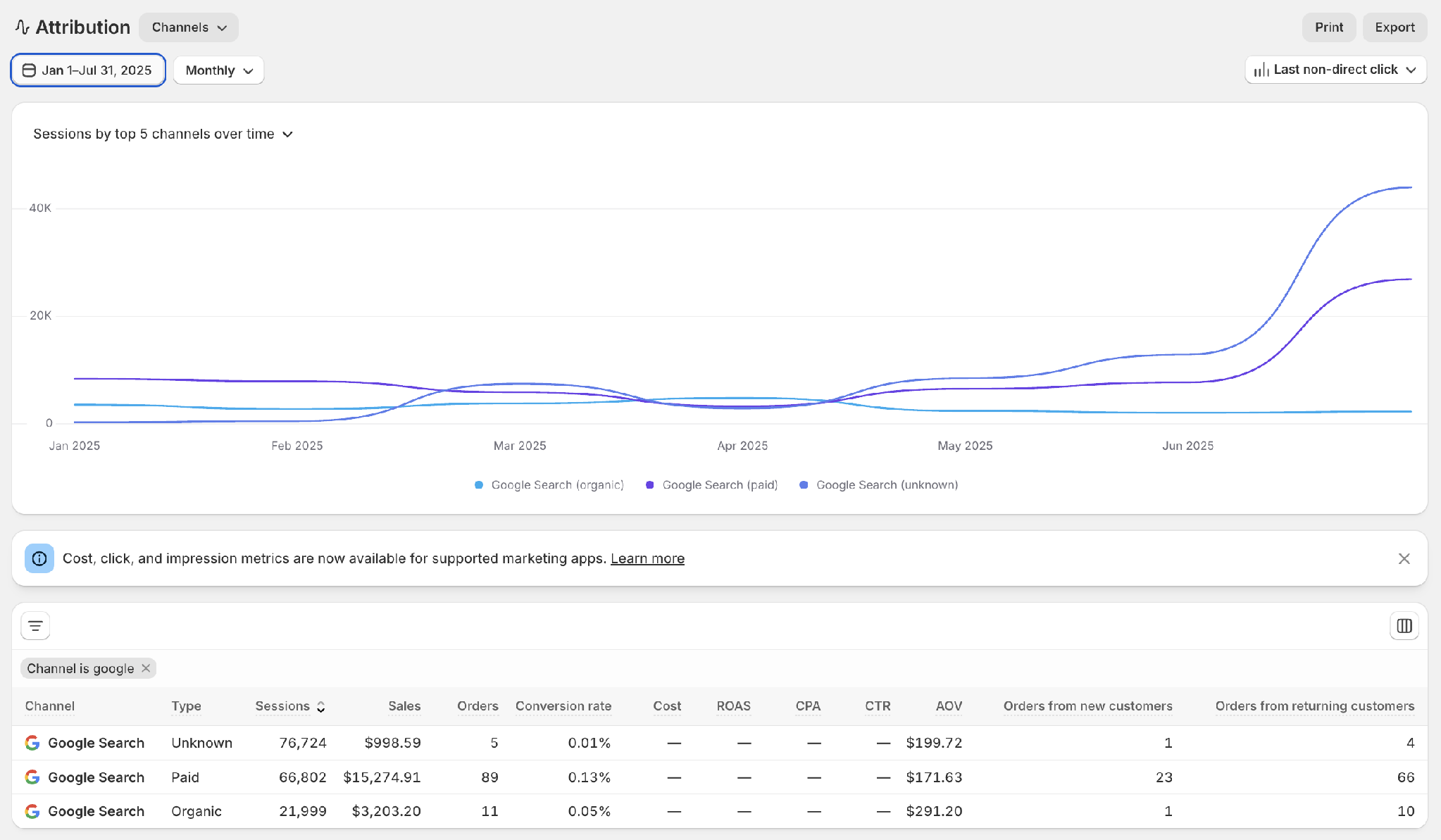
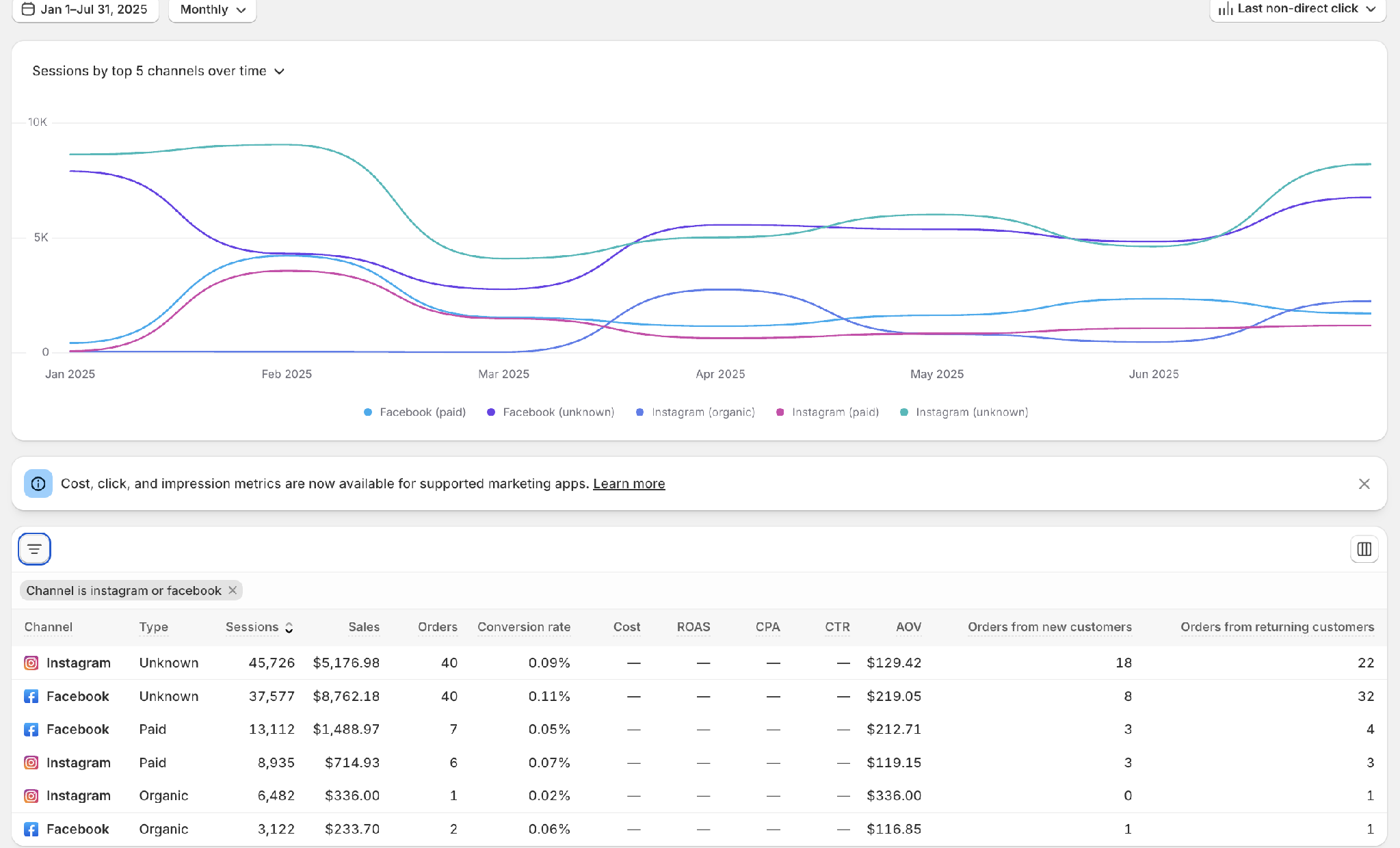
Google: 66.8k paid sessions, 89 orders in six months — 0.13%, because campaigns optimized for add-to-cart, not purchase. Meta: 96 orders from 115k sessions, two-thirds of them repeat buyers, with no cold-audience campaigns and no creative pipeline. And the catalog was sliding into preorder (18.4% → 57.6% of SKUs) — more waiting, more friction, exactly when cold traffic needed to convert.
What we did
- Moved both accounts off proxy goals (add-to-cart, engagement) onto real purchase value — so the algorithms learned from actual buyers, not clickers.
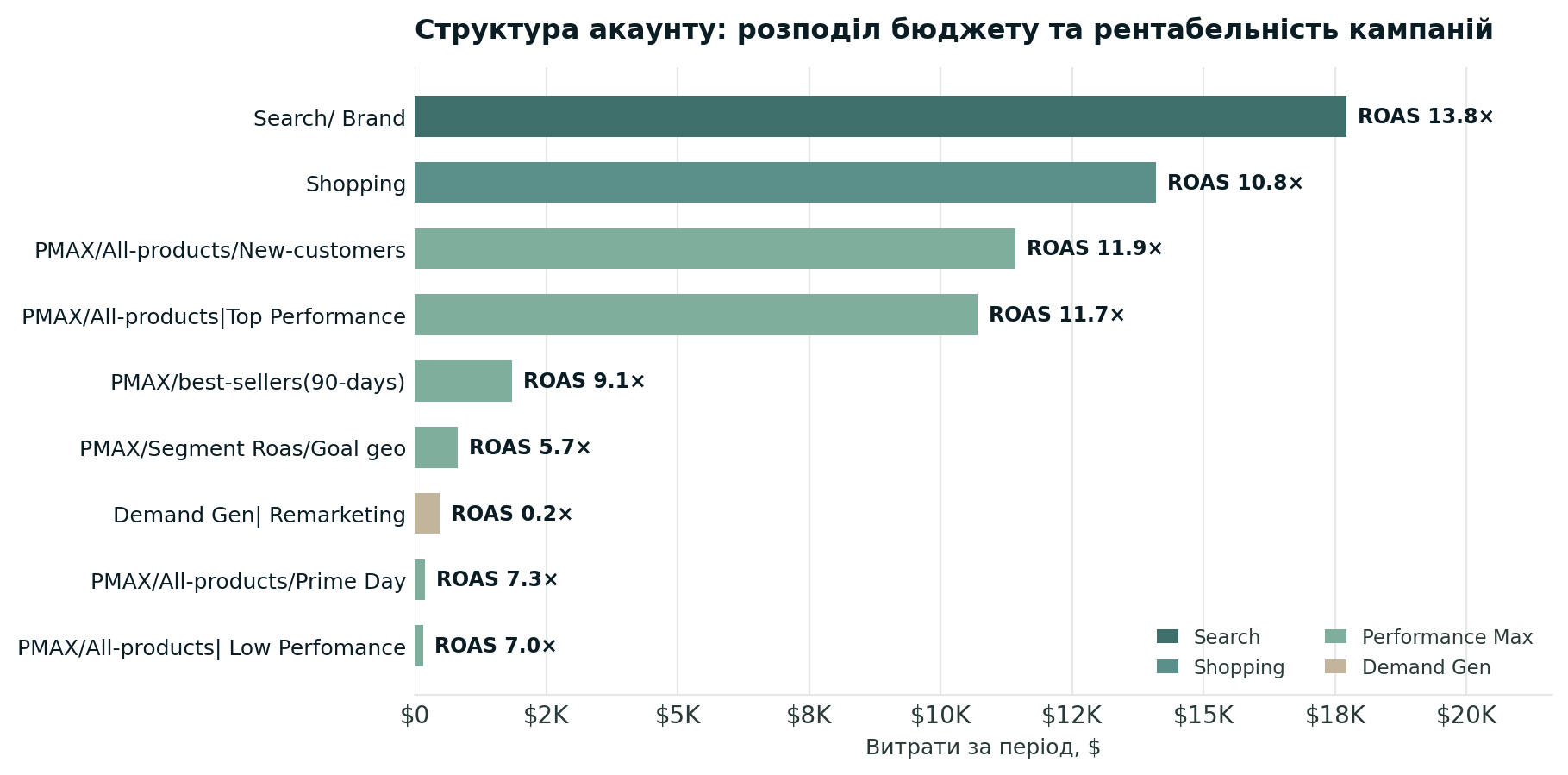
- Rebuilt Google's account structure by role — brand defense, Shopping, a dedicated new-customer PMax circuit — and staged bid targets up in small steps instead of jumping.
- Built Meta from scratch around acquisition: 70–80% of budget to cold-audience TOF campaigns, backed by a weekly creative pipeline built on customer research (4,512 reviews, competitor teardown, three real buyer personas).
- Turned the brand's 3–4 month preorder wait into part of the pitch on Meta, and made sure Google credited demand the moment an order was placed — not when it shipped.
Outcome
Over the same Jan–Jul window a year apart, combined orders across Google and Meta went from 185 to 5,131. Google did it on both traffic quality and conversion: paid sessions grew 57.5% while orders grew 28.3x and the new-customer share of orders doubled (23.8% → 48.3%). Meta did it on both volume and quality: sessions nearly doubled (+95.6%), orders grew 27.2x, and the channel flipped from mostly-repeat (65.6% of orders) to mostly-new (58.6%). All of this happened while the brand tripled its dependence on preorder inventory (18.4% → 57.6% of catalog) — proof the friction from longer wait times was actively managed, not just absorbed.
Google Ads
From traffic that didn't convert to a systemic acquisition channel
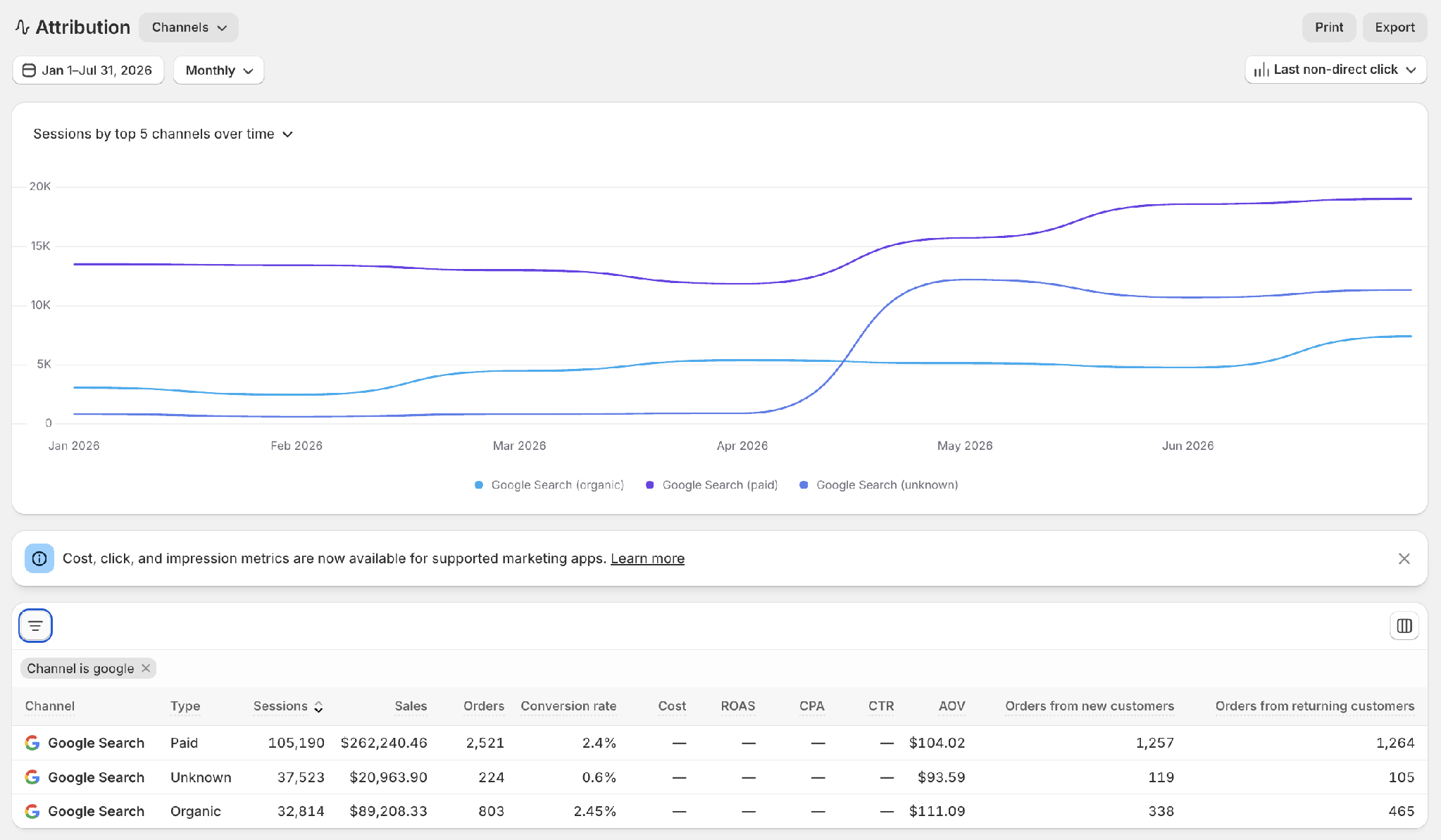
At the start, Google was sending real traffic and closing almost none of it — the same paid audience produced just 89 orders in six months. We rebuilt the account so the algorithms optimized for an actual purchase instead of an intermediate action, which is what drove the jump from 0.13% to 2.4% conversion as paid traffic grew 57.5%.
Sessions
+57.5%
Orders
×28.3
Conversion rate
New customers in orders
Optimized for real purchases
Campaigns were learning from add-to-cart events — lots of 'conversions', almost no sales. Removed those goals, moved the whole account to Purchase with order value passed through, so the algorithm started finding buyers instead of clickers.
Split the account by role
Brand defense in Search, the main catalog in Shopping, a core of proven bestsellers plus a dedicated new-customer circuit in Performance Max, video for purchase and remarketing — each with its own budget and target so strong products stopped subsidizing weak ones.
Segmented the catalog by proof, not guesswork
Products were grouped into verified 90-day bestsellers, top performers, mid, and weak — each with its own profitability bar. Budget pushed hardest where sales were already proven; new items tested separately under a controlled target.
Ramped bidding in stages
Shopping's ROAS target moved 50% → 150% → 300% → 400% → 450% → 470% over March–May; the new-customer campaign went 200% → 250% → 350% → 450% → 475%, settling at 440%. Branded search moved to a $15/$19 target CPA once its initial ROAS phase proved out. Every step was a reaction to actual sales, never a guess.
Targeted new customers directly
Added a new-customer value bonus at the account level and ran a dedicated acquisition campaign — without cutting off the existing base. New-customer share of orders went from 23.8% to 48.3%.
Cleaned up traffic quality
Added account-level negative keywords (including rental-intent searches) and separated branded from non-branded traffic with negative lists, so branded demand didn't get counted as new acquisition.
Paid traffic grew 57.5%. Orders grew 28.3x. That gap is the whole story — this wasn't more spend finding more people, it was the account finally learning what a real buyer looks like.
Meta Ads (Facebook + Instagram)
From repeat-buyer support channel to acquisition engine
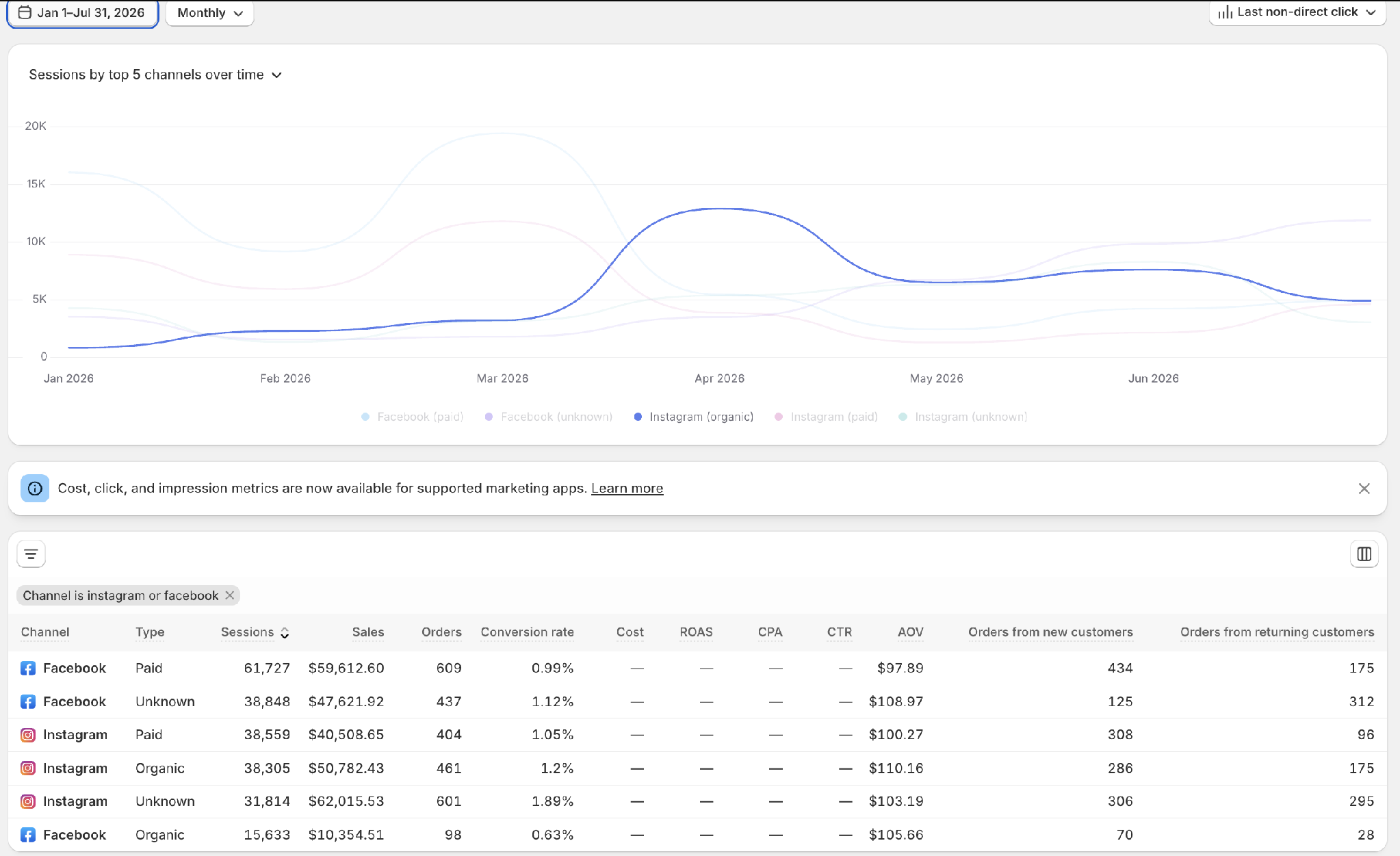
Before, Meta mostly re-sold to people who'd already bought — 65.6% of its orders were repeat customers, and the 96 orders it did generate came from 115k sessions at a 0.08% conversion rate. There were no cold-audience campaigns, no creative pipeline, and no split between funnel stages. We built all three from scratch.
Sessions
+95.6%
Orders
×27.2
Conversion rate
×14.5
New customers in orders
Built the account around acquisition
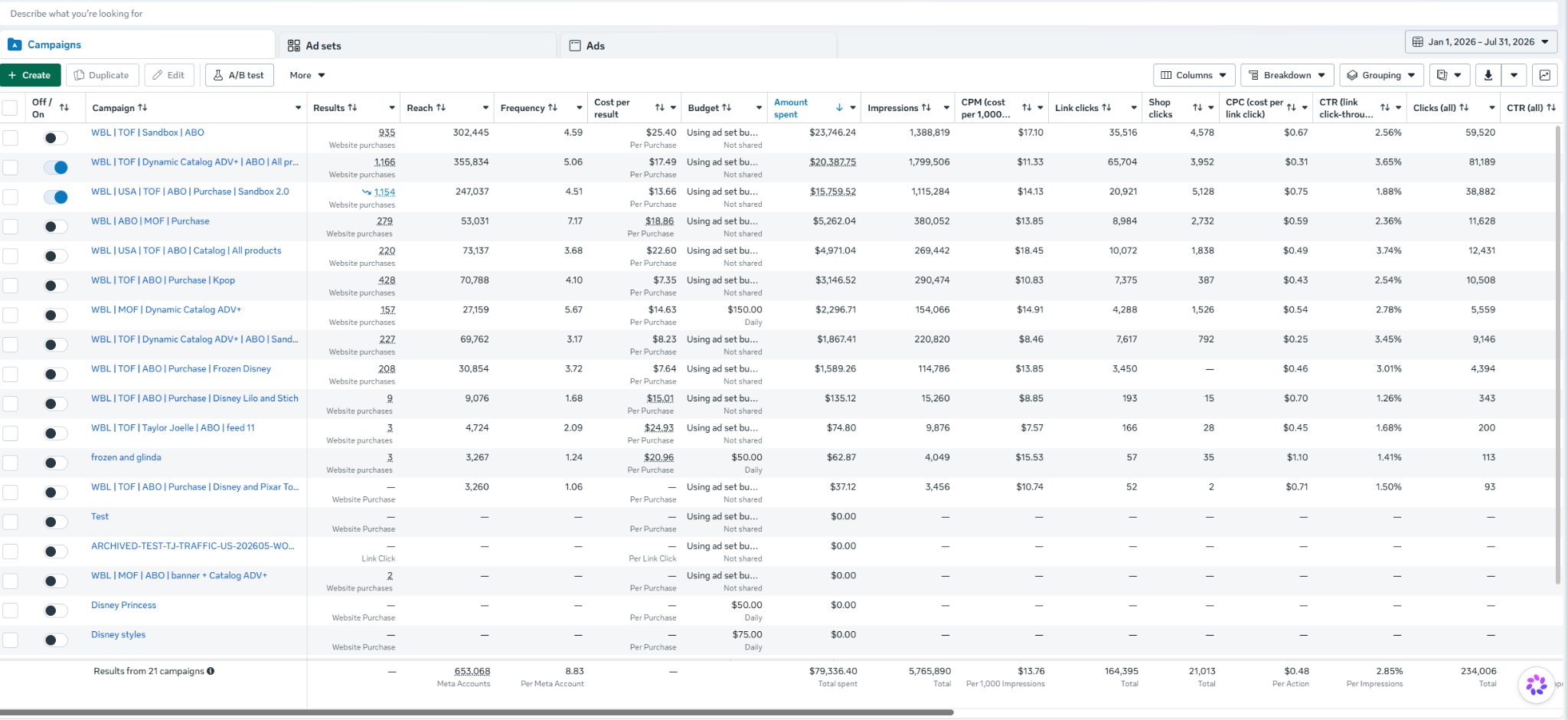
TOF Sandbox (cold, Advantage+ BO) tests new creative and kills weak performers inside 48 hours; TOF Dynamic Catalog (cold, Advantage+) became the main new-customer driver at 7.11x ROAS and $15.42 CPA; MOF Retargeting (warm, Advantage+) closes people who saw a TOF ad but didn't buy, with promo codes and tiered discounts. 70–80% of total budget sits in TOF — the deliberate shift from re-selling to finding people.
Made creative a weekly system, not a backlog
Started from research, not guesses — 4,512 reviews, Reddit, competitors, and all 195 SKUs, distilled into three buyer personas (Disney Trip Mom, Birthday Party Mom, Gift-Giving Grandma), each with its own angle and hook. A weekly brief → approve → produce → launch cadence kept cold-audience creative fresh; video and Dynamic Catalog consistently beat static on cold-audience CPA.
Built a repeatable launch cycle
The brand drops a new licensed collection every 3–4 weeks, so we built three phases around it: a 7-day prep ramp (+10–20% budget/day, all creative ready in 1:1 and 9:16), a 7-day launch spike (TOF budget up hard, a dedicated ad set per hero product, weak creative killed on day 2), and a 7–14 day post-launch taper (TOF down, MOF up, tiered 5/10/15% discounts). Proven across six launches, from Little Mermaid to Swan Lake.
Fixed the gap between launches
Sales dropped without a launch or offer — a real problem for an algorithm that needs a steady stream of conversions to keep learning. Proactive 10% sitewide discounts between drops smoothed that out, and after four months the real bottleneck turned out to be creative volume, not structure — scaling volume of proven winners (instead of endless new tests) pushed ROAS to 6.61x.
Learned which licenses work cold
Cinderella and Marie held strong ROAS on cold audiences and got bigger launch budgets as a result; Toy Story and Beauty and the Beast had lower recognition and needed more budget to perform, so they were tested more cautiously.
Blended ROAS during launch weeks lands around 5–7x, blended CAC $15–25 — sustained across six full launch cycles, not a one-off spike.
Context: preorder
The catalog tripled its dependence on preorder — and grew anyway
A year ago preorder wasn't a structural issue: 18.4% of the catalog (84 of 456 products) shipped on preorder, accounting for 46.1% of units sold. By this year that had grown to 57.6% of the catalog (155 of 269 products) and 77.7% of net sales. Longer waits are always a conversion and repeat-purchase risk — and total units sold still grew 47% anyway, which meant the friction had to be actively managed, not just tolerated.
Preorder share of catalog
Preorder share of units sold
Preorder share of net sales
Total units sold
Made preorder invisible to the algorithm
- Orders counted as real sales the moment they were placed, not when they shipped — so the algorithm learned from actual demand, not warm clicks.
- Catalog was split by proven performance, not preorder status — verified bestsellers (many on preorder) got an aggressive target; unproven items ran under a separate, lower ~300% ROAS target so they didn't drag down the proven core.
- Branded search around major launches (Disney/Cinderella) was switched on and off in sync with preorder windows and pointed at dedicated collection pages.
Turned the wait into part of the pitch
- Creative pre-filtered for people who understood this was a limited licensed product worth waiting for — cheap 'buy it tomorrow' traffic self-selected out instead of burning budget.
- Launches, not sitewide sales, became the main revenue event — 2–3 a month, each reading as 'just dropped, nowhere else, reserve now.'
- The 3–4 month wait was framed as gift planning: 'order now, it arrives right on time for Halloween / a birthday / Christmas' — solves the gift ahead of time and ships exactly when it's needed.
The eight flagship dresses that were on preorder in both years actually declined slightly as a group (−11.2% combined units) even as total catalog units grew 47% — the growth came from a wider set of new and secondary styles, not from a few bestsellers carrying more weight.
Timeline · How it actually unfolded
Twelve weeks, mapped week by week — here's the system, not the luck.
Kill the proxy goals
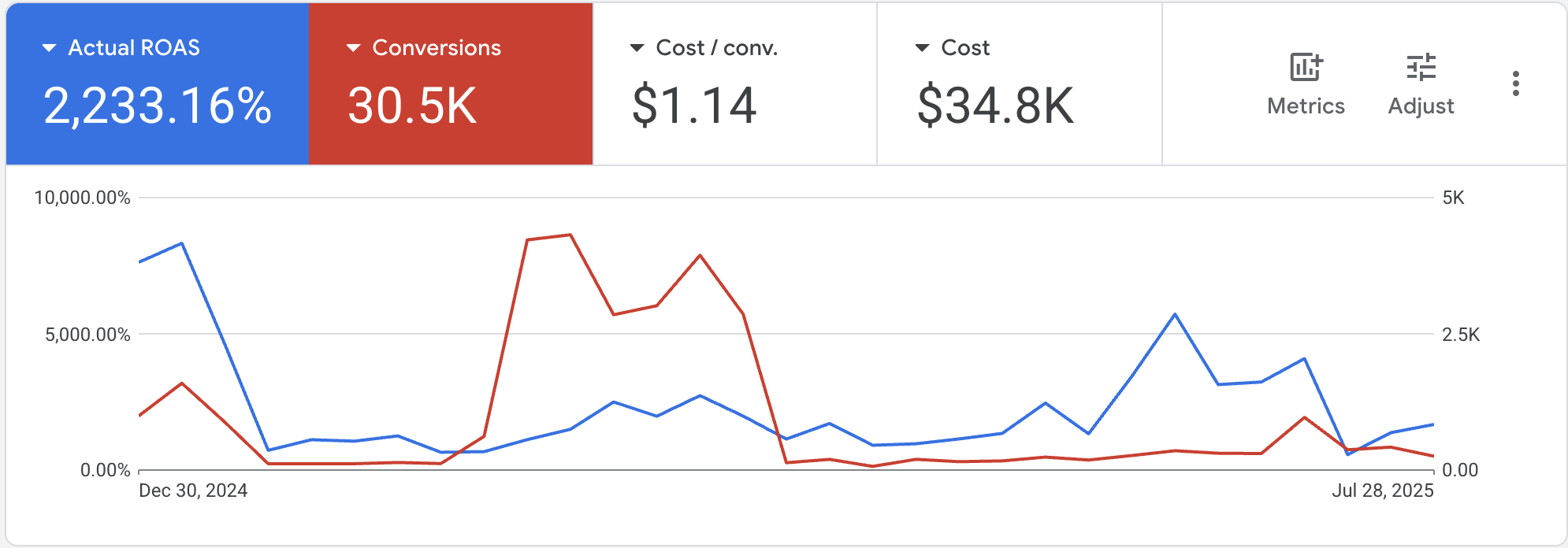
Google was optimizing for add-to-cart — 30.5K 'conversions' at $1.14 that never became orders. Moved the whole account to Purchase with order value passed through, and rebuilt structure by role: brand Search, Shopping, PMax.
Segment the catalog, stage the bids
Products grouped into verified 90-day bestsellers, top, mid and weak, each with its own profitability bar. Shopping's ROAS target stepped 50% → 150% → 300% → 400% → 450%, never in one jump.
Meta rebuilt for acquisition
Customer research first — 4,512 reviews, competitor teardown, three buyer personas — then a cold-audience TOF structure taking 70–80% of budget and a weekly creative pipeline behind it.
New customers, not the same list
New-customer value bonus on Google plus a dedicated acquisition circuit; on Meta the launch-cycle system turned the 3–4 month preorder wait into gift-planning copy. New-customer share doubled on Google, flipped the majority on Meta.
185 → 5,131 orders
Google 89 → 2,521 orders on +57.5% paid traffic; Meta 96 → 2,610 with sessions up 95.6%. Conversion did the work, not just the budget.
Proof · Real dashboards
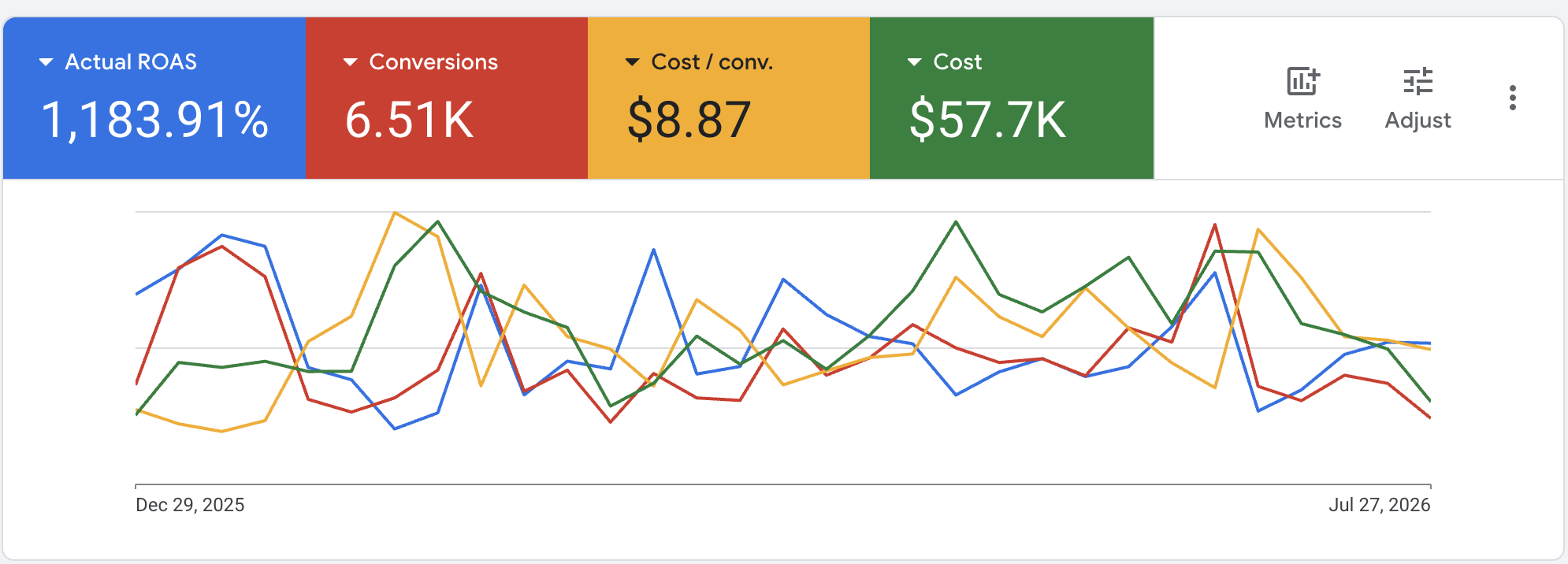
Real dashboards, zero editing. Judge the numbers yourself.
Screenshots pulled straight from the client's own ad and analytics dashboards. Same numbers we've been quoting on this page.
The creative
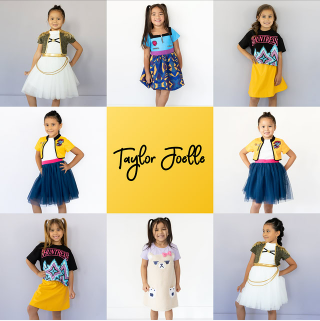
Here's what actually ran on this account.






Want this for your brand? Book the 45-min call.
You leave with a 90-day plan whether we work together or not.